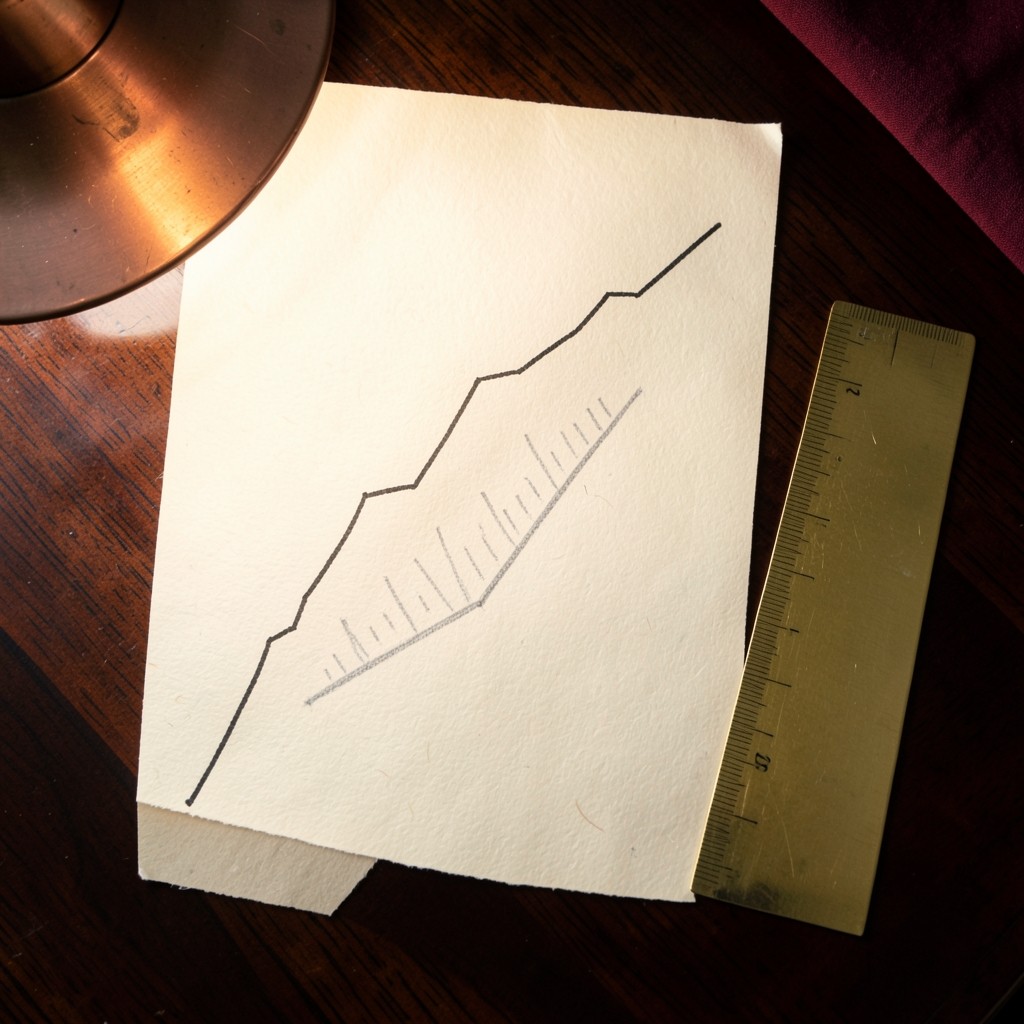
Pole first
A flag needs a pole: a steep, obvious run that a stranger could see from the doorway. If you have to argue for the pole, you do not have a flag yet. We make students point at the first bar of the run and the last bar before the pause. Those two bars are the pole. Everything after is the question.
Channel or triangle
A flag’s pause is a small channel that leans against the pole. A pennant’s pause is a small triangle. People mix them because both are pauses. On paper the difference is the shape of the boundaries. We do not upgrade a messy drift into either name just because the pole was exciting.
Count the bars in the pause against the bars in the pole. This is a studio habit, not a magic ratio. When the pause has lasted longer than the pole and the boundaries are loose, we cross out the word flag and write range. The Saturday sketch morning is full of these crossings-out.
What we do not add
We do not attach a measured target during the first look. The recognition is the pause and the pole. What a market might do after a break is a later conversation, and it is not a promise the drawing can make. If your sheet only has the word flag and no pole marked, start again.